

How to Improve NACE First-Destination Survey Results
NACE first-destination surveys are the standard for measuring career outcomes, but low response rates undermine your data. Prentus runs customizable FDS surveys by email and SMS, then fills the gaps with an automatic monthly LinkedIn scan and dozens of AI-reviewed third-party sources, dramatically improving your knowledge rate and reporting accuracy.
Trusted by career teams at






The Challenge
NACE first-destination surveys are the standard for measuring career outcomes, but low response rates undermine your data. Prentus runs customizable FDS surveys by email and SMS, then fills the gaps with an automatic monthly LinkedIn scan and dozens of AI-reviewed third-party sources, dramatically improving your knowledge rate and reporting accuracy.
Prentus provides the tools to solve this problem at scale, without adding headcount or complexity to your operations.
How Prentus Solves This
Three powerful capabilities that address this challenge directly.
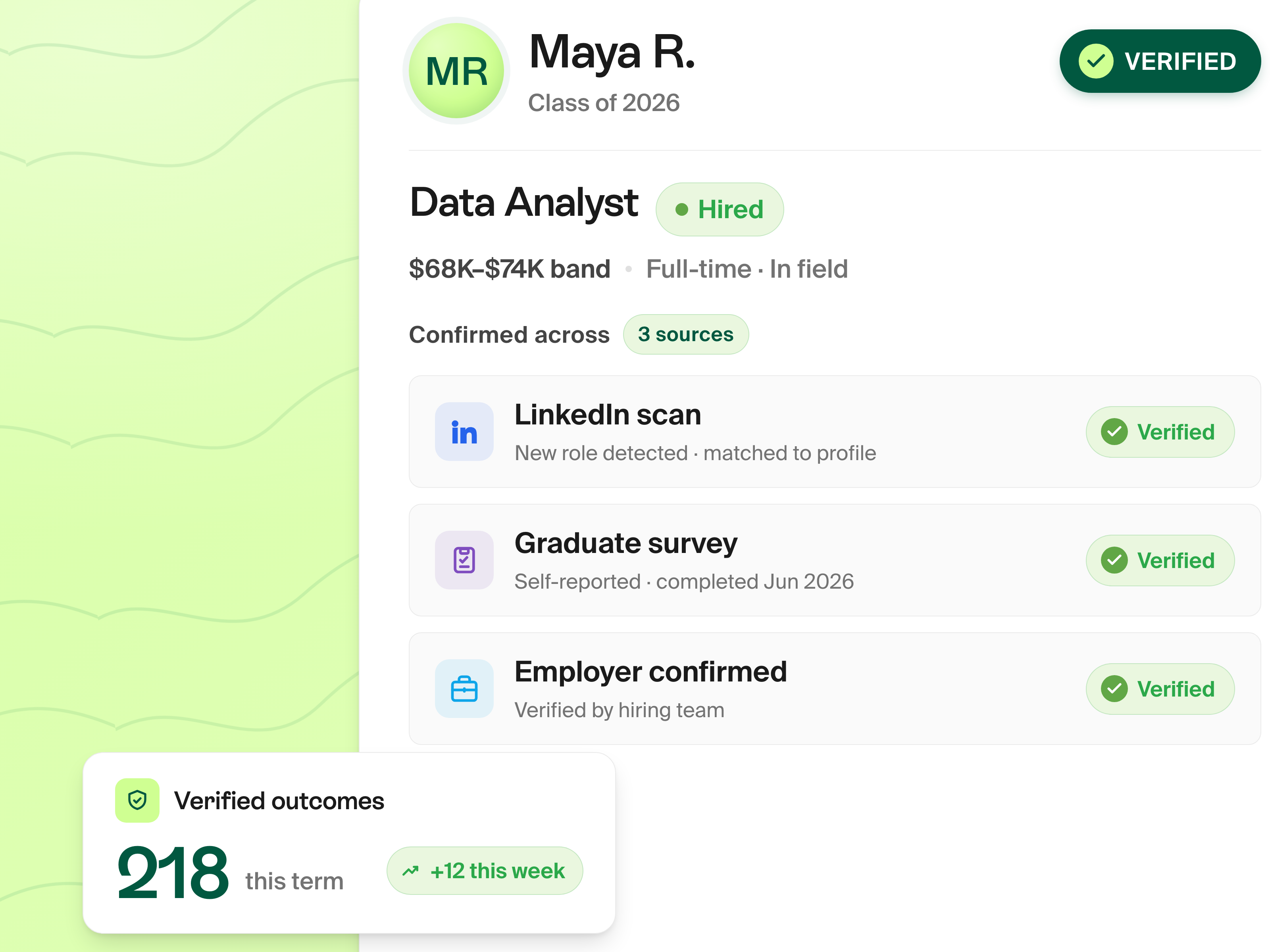
Outcome Tracking
Track where your graduates land with an automatic monthly LinkedIn scan plus dozens of AI-reviewed sources, paired with built-in FDS surveys by email and SMS. Together they give you accurate data for reporting and accreditation without adding staff hours.
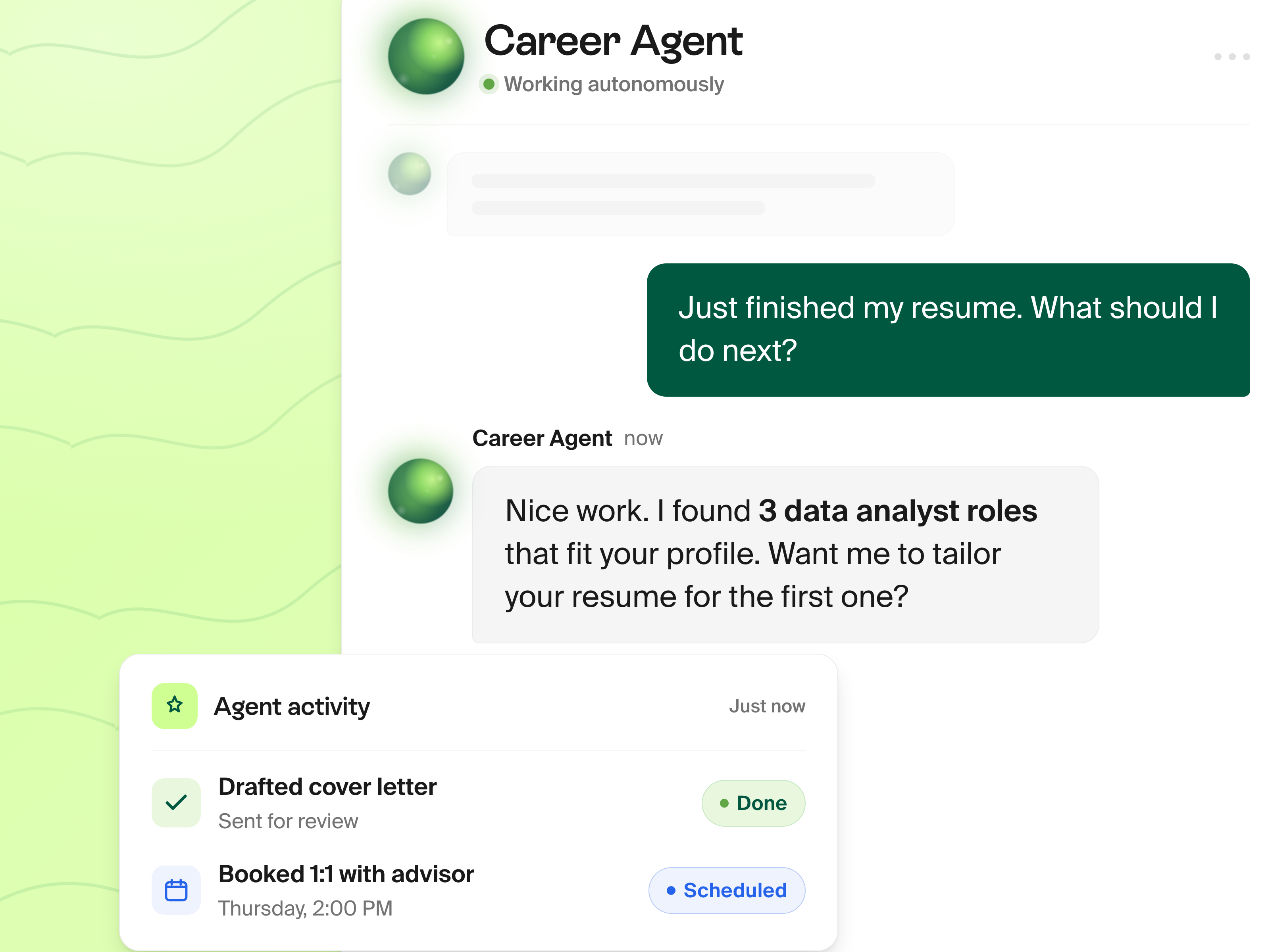
AI Career Advisor
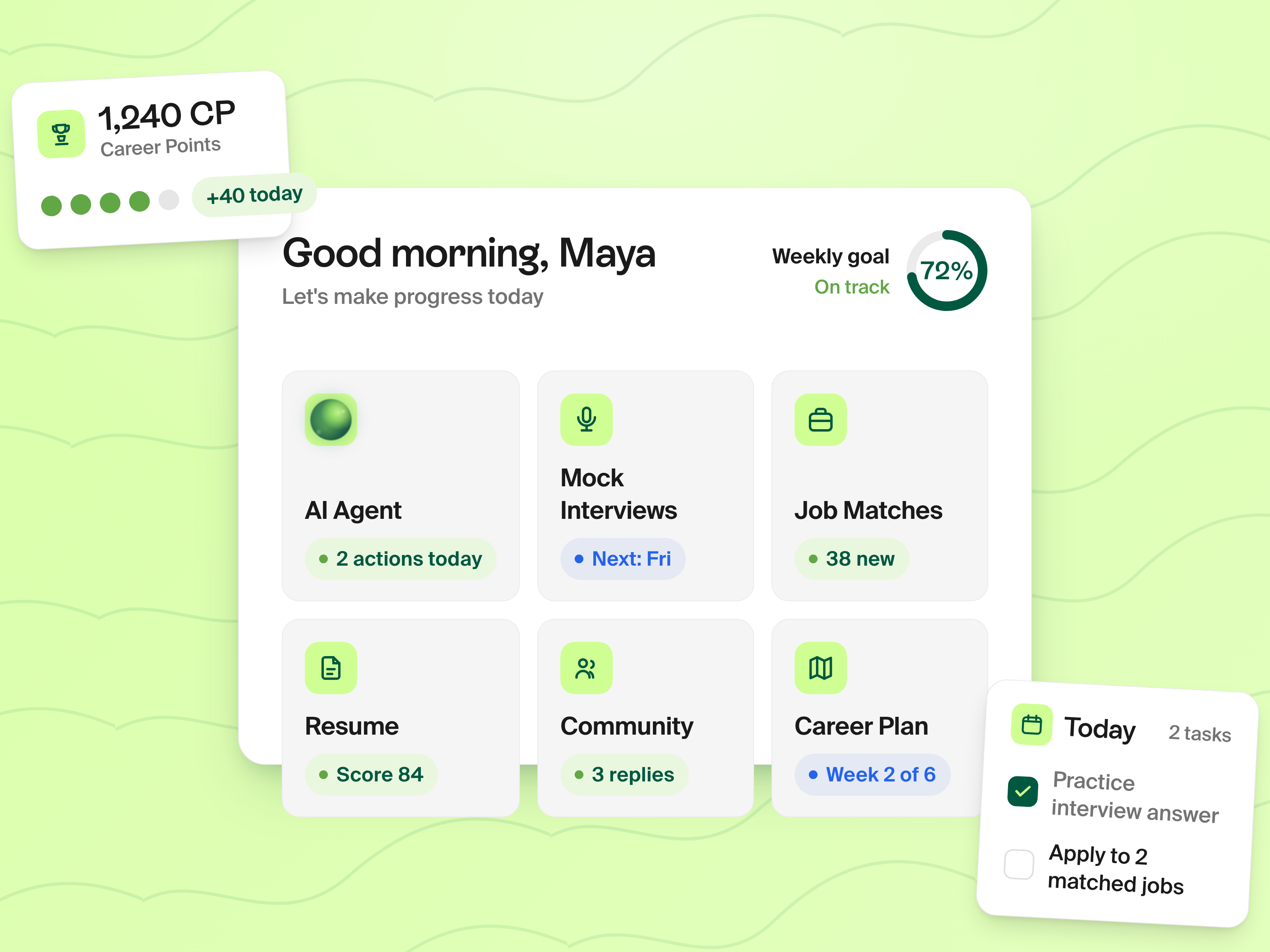
Our AI Career Advisor acts as a proactive coach for every student, providing personalized guidance, weekly career plans, and timely nudges that keep students engaged in their career journey.
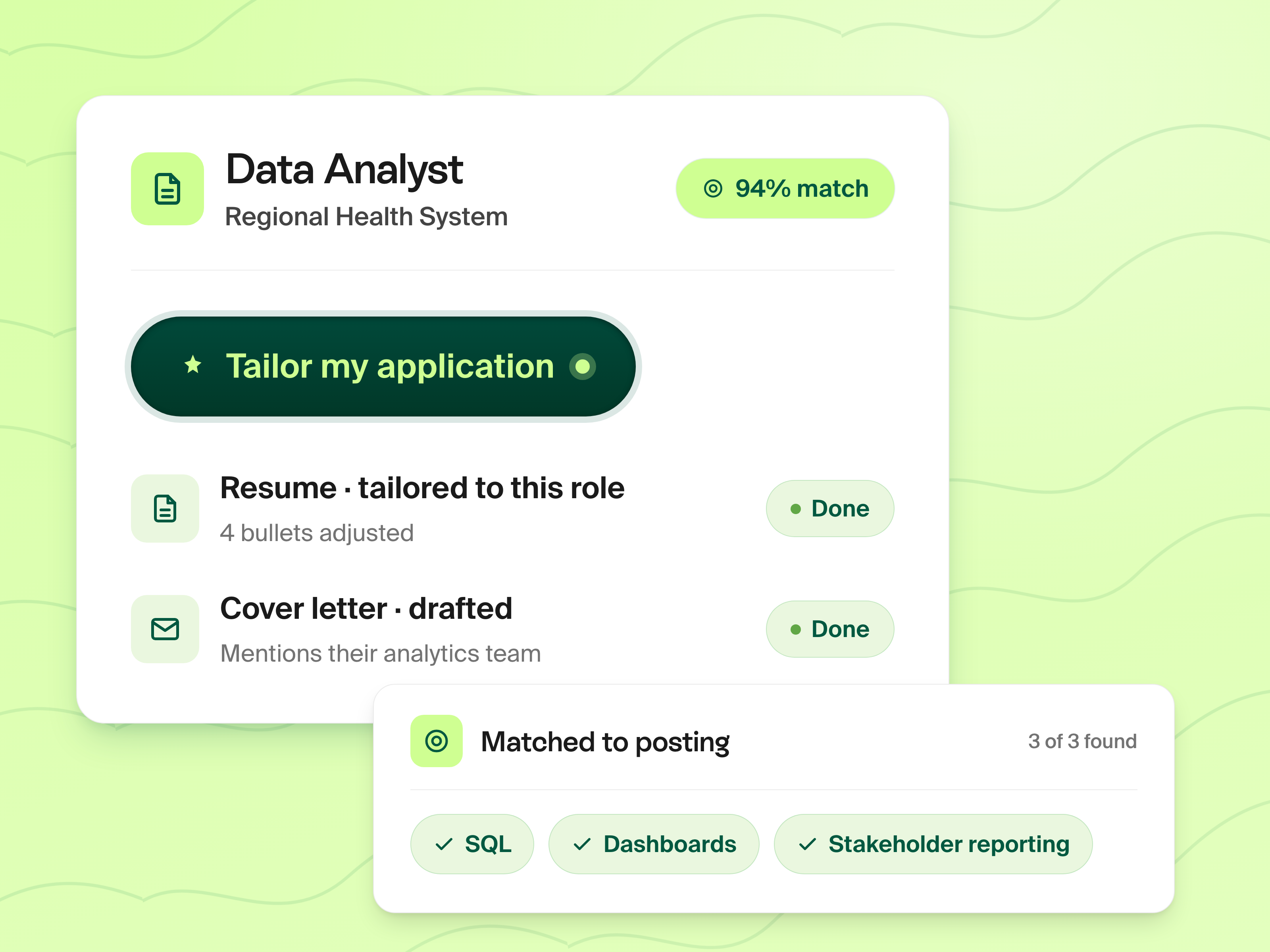
AI Resume Builder
The AI Resume Builder creates professional, ATS-optimized resumes in minutes. Students can tailor resumes to specific job descriptions and get instant feedback on how to improve them.
See It in Action
NACE considers a 65% knowledge rate the minimum for reliable reporting, but many institutions struggle to reach even 50%. Institutions using multiple data sources, including LinkedIn verification, consistently achieve higher knowledge rates.
- Captures employment data automatically through LinkedIn verification
- Reduces survey fatigue while improving response rates
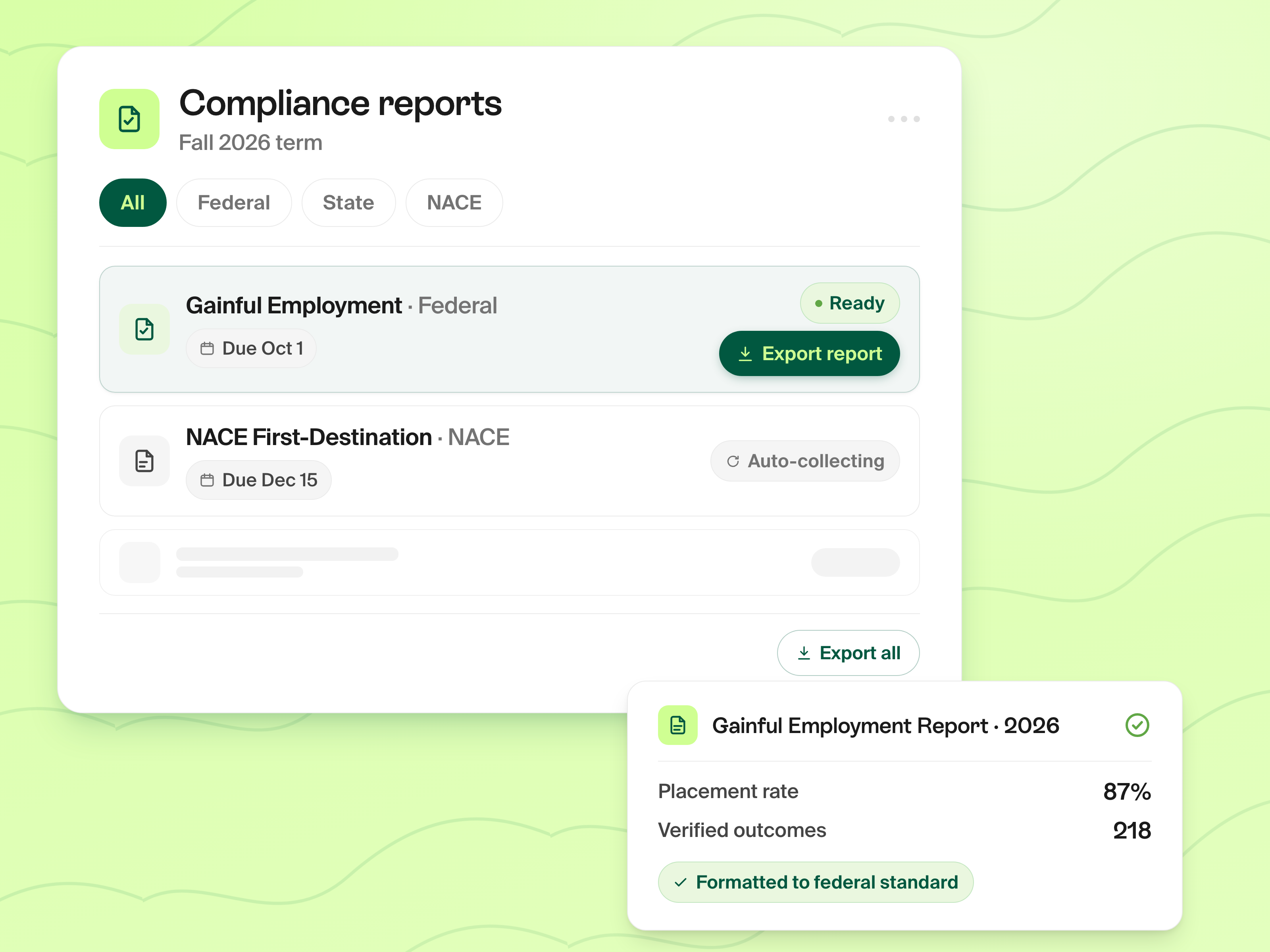
- Supports gainful employment and NACE reporting requirements
Ready to solve this problem?
Book a DemoPrentus has completely transformed how we support our students. The AI tools handle the volume while our team focuses on what matters most, building real relationships.
Ana Aristizabal
Director of Career Services
Frequently Asked Questions
What is a good knowledge rate for first-destination surveys?
NACE considers a 65% knowledge rate the minimum for reliable reporting, but many institutions struggle to reach even 50%. Institutions using multiple data sources, including LinkedIn verification, consistently achieve higher knowledge rates.
How does Prentus improve the knowledge rate?
Prentus captures employment data through LinkedIn verification for graduates who never respond to surveys. This supplementary data source fills gaps in your survey responses, often adding 15-30 percentage points to your knowledge rate.
Can Prentus replace the traditional FDS process?
Prentus works best as a complement to your existing FDS process, not a replacement. Pairing survey responses with automatic LinkedIn scans and AI-reviewed third-party sources gives you a fuller and more accurate outcome picture.
How does Prentus support NACE first-destination reporting?
Surveys remain the NACE-recognized primary method for first-destination reporting, and Prentus makes them easy to run, with customizable FDS surveys sent by email and SMS right in the platform. For the graduates who never respond, an automatic monthly LinkedIn scan and dozens of AI-reviewed third-party sources fill in verified employment data for staff to confirm, raising your knowledge rate without extra staff hours.
How do we get started with improving our FDS?
Implementation is straightforward. Prentus needs your graduate records to begin matching with LinkedIn data. Most institutions see their first improved knowledge rate data within one reporting cycle of implementation.
See Prentus in Action
Join the institutions already using Prentus to deliver better career outcomes.