Career services teams at most colleges operate at a 1-to-500 ratio. The average advisor spends their time managing logistics: resume reviews, interview schedules, job fairs, and has little left for the strategic guidance that actually moves the needle on student outcomes. A growing number of institutions are now deploying an AI career advisor to close that gap: an always-on digital coach that works alongside human staff to reach every student, not just the ones who show up.
What is an AI career advisor?
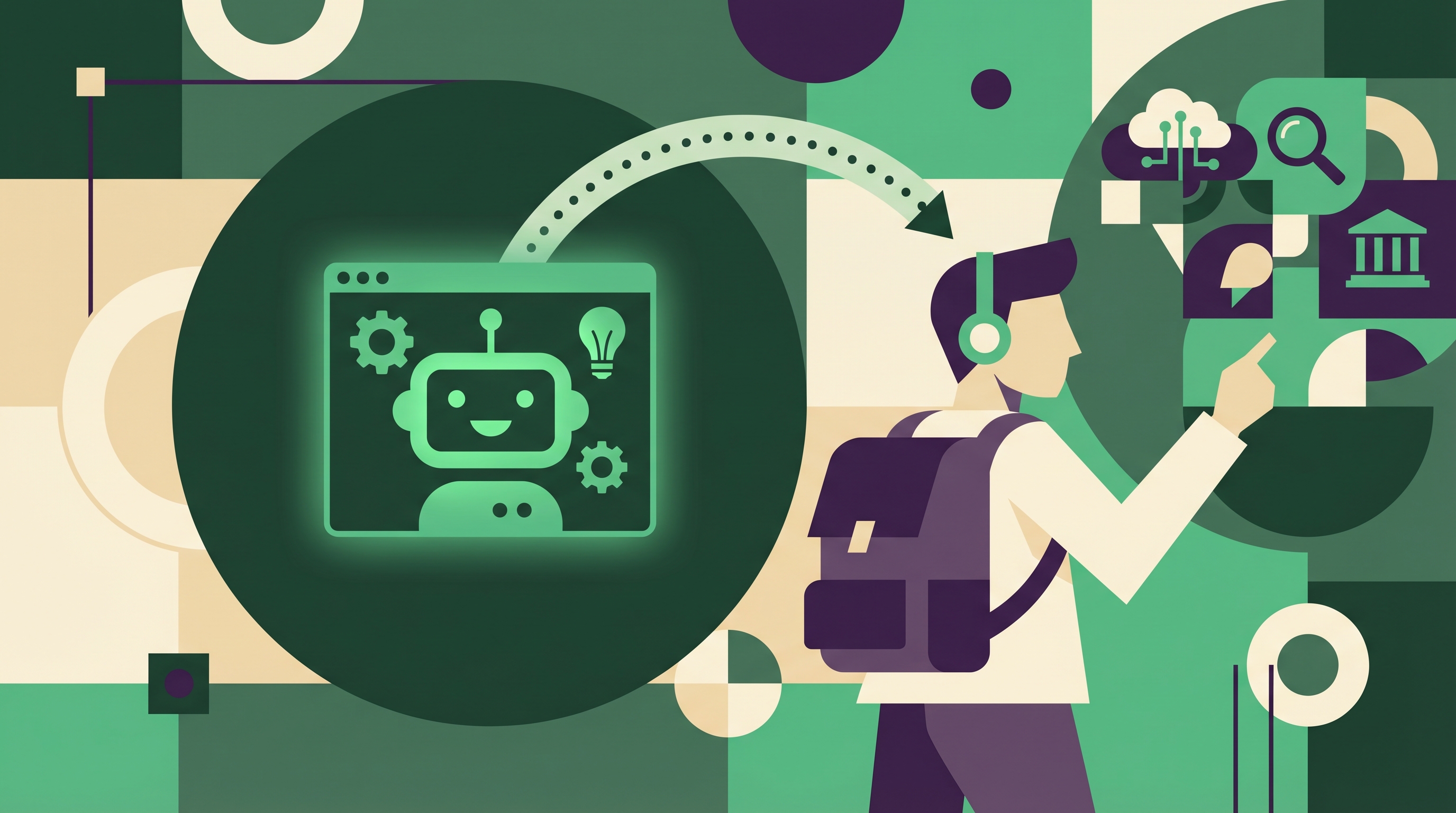
An AI career advisor is an always-on digital coaching platform that helps college students navigate job searches, build resumes, practice interviews, and explore career paths using artificial intelligence. Unlike traditional career services that operate during business hours with limited staff, an AI career advisor provides personalized guidance 24/7 at a ratio of 1:every-student-enrolled. Institutions deploy AI career advisors to extend the reach of human advisors and improve measurable career outcomes like employment rates and time-to-hire.
The term gets used loosely. Some vendors call a chatbot with a resume-scanning feature an AI career advisor. Others mean a full AI agent that manages a student's entire job search lifecycle, from major selection through offer acceptance. Here is how to think about the category, what it actually does, and what to look for when evaluating platforms for your institution.
Quick Summary
An AI career advisor is a software platform that uses artificial intelligence to guide students through career discovery, job applications, resume building, and interview preparation without requiring a human staff member to be present. Unlike a FAQ chatbot, an AI career advisor maintains context across sessions, personalizes its guidance to each student's field and goals, and tracks outcomes automatically. According to NACE research, 91% of career services professionals say AI is becoming essential to their operations, yet most institutions have not yet deployed a dedicated AI advisor. The window to lead rather than follow is short.
Source: NACE (National Association of Colleges and Employers)
How AI Career Advisors Work
An AI career advisor is not a static knowledge base. It is an agent that holds context about each student across sessions: their target industry, resume state, interview history, and job application status. When a student returns, the advisor picks up where the conversation left off.
The core capabilities typically include:
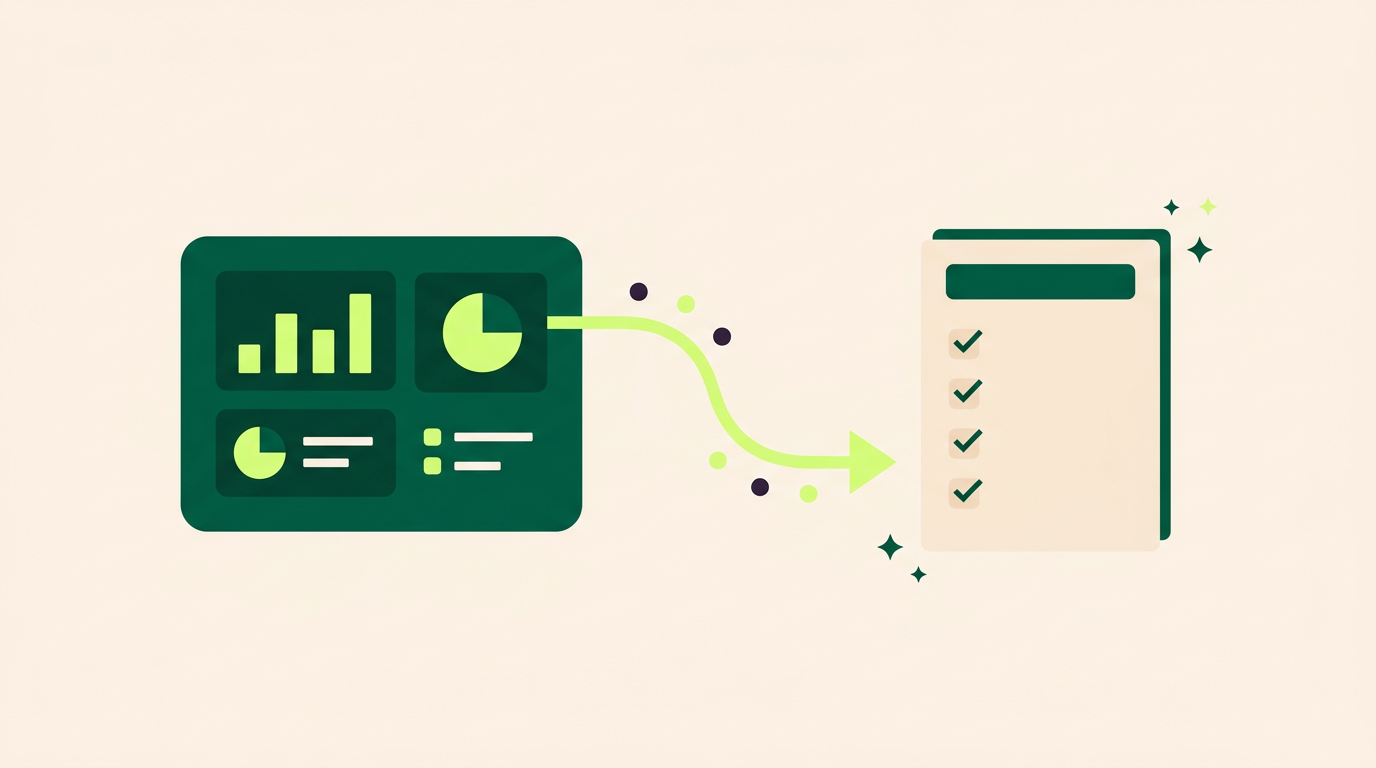
- Resume and cover letter generation. Students describe their experience; the AI produces a tailored resume and cover letter formatted for their target role. Prentus's AI resume builder, for instance, passes ATS screening at rates comparable to professionally reviewed resumes.
- AI mock interviews. Students practice with an AI interviewer that adapts follow-up questions based on their answers, scores responses against role-specific criteria, and provides specific feedback. A 2026 arXiv study found that AI skills training increases interview invitation probabilities by 8 to 15 percentage points.
- Job matching and application tracking. AI matches students to relevant openings and tracks every application, helping them stay organized through a long job search. Industry data shows only 10-20% of students actively use career services, largely because traditional office hours don't fit student schedules. AI advisors remove that barrier entirely.
- Outcome tracking. When a student accepts an offer, the AI advisor logs it, automatically feeding employment outcome data back to the institution without requiring manual follow-up from staff.
For Career Services Teams at Universities
Your career services team cannot manually support 500 students and still drive real outcomes.
Prentus AI Career Advisors work alongside your team to reach every student proactively, not just the 15% who book appointments. Institutions using Prentus see 3x the engagement of traditional career services, and automated outcome tracking that keeps accreditation reviews off your plate. Book a demo to see how it maps to your specific enrollment size and student-to-advisor ratio.
Why Institutions Are Adopting AI Career Advisors
Three pressures are converging that make AI career advisors a near-term necessity rather than a nice-to-have.
Capacity that cannot be hired away
Most career services departments cannot add staff fast enough to serve their enrollment. Even well-resourced universities run at 1-to-300 or 1-to-500 advisor-to-student ratios. Hiring more advisors is expensive, and the constraint does not scale linearly: adding one advisor helps but does not solve the underlying access problem. An AI career advisor works with every student simultaneously, at any hour, without a budget line for benefits or overhead.
OBBBA and the outcome reporting mandate
The Optimizing Broadband Broadcast Advertising for Alumni Act requires institutions to track and report verified employment outcomes. AI career advisor platforms like Prentus automate that tracking by capturing offer acceptances directly from students and cross-referencing them with LinkedIn employment data. Institutions that rely on manual follow-up surveys will struggle to meet reporting timelines. Those with AI advisors in place will have the data automatically.
Student expectations have shifted
Students expect to handle most tasks on their phone. Booking an appointment with career services, waiting three days for a resume review, and then meeting in person during business hours does not match how students actually operate. An AI career advisor meets students on Slack, in a mobile app, or through a web portal, whenever the student is ready to work. Platforms that do this well see roughly 3x the engagement of traditional career services, where only 10-20% of students actively use the office.
What to Look for in an AI Career Advisor Platform
Not all AI career advisors are built to the same standard. Here is what matters when evaluating options for your institution.
- True 24/7 availability, not office-hours chatbot. If the system only responds during business hours or drops conversations when the AI is uncertain, it is not an AI advisor. It is a triage tool. Ask vendors what happens when a student messages at midnight before an interview.
- Automated outcome tracking, not self-reported surveys. The OBBBA compliance value of an AI advisor depends on whether it actually captures employment data automatically. Ask how outcomes are tracked and verified: if the answer involves sending students a survey, the platform is not solving the problem.
- FERPA compliance and SOC 2 certification. Student data is protected information. The platform should be able to provide documentation of FERPA compliance and SOC 2 Type II certification. If the vendor cannot produce these, move on.
- Reporting that ties AI usage to employment outcomes. Your AI advisor should generate reports showing student engagement rates, resume completion rates, mock interview activity, and, critically, the employment outcome rate for students who used the platform versus those who did not.
- Integration with your existing stack. The platform should connect to your student information system (Banner, Colleague, Workday) and your existing LMS or portal. A standalone tool that students must remember to log into separately will have the same low utilization problem as traditional career services.
The AI Career Advisor Is Not Replacing Anyone
The framing sometimes creates anxiety: will AI replace human career advisors? It will not, and institutions that treat it as a replacement will get poor results. The AI career advisor and the human advisor have different strengths.
Human advisors excel at complex strategic decisions: evaluating a student's overall career path, handling sensitive situations that require empathy and judgment, and building the employer relationships that generate job opportunities. AI advisors excel at volume: reviewing every resume, running every mock interview, and staying in touch with every student through a months-long job search. The institutions getting the best outcomes are using both: the AI handles the repetitive work so human advisors can focus on the relationships and decisions that actually require a person.
Research from the University of Texas found that AI-assisted resume tools yielded a 22.7% callback rate lift versus manual drafting, and that AI plus human review together produced a 31.4% callback lift: the hybrid model outperformed either alone. The same pattern holds for mock interviews and career coaching. Think of the AI advisor as giving every student a personal trainer while the human advisor acts as the coach.
If you are exploring how an AI career advisor could fit into your career services model, we would welcome the conversation.