

How to Scale Career Coaching with Limited Staff
Most career services teams are trying to support more students than their staffing model was built for. Prentus gives every student an AI career coach, then helps your team focus on the students and employers who need human judgment most.
Quick answer
What is the best way to scale career coaching with limited staff?
The best way to scale career coaching with limited staff is to use AI for the high-frequency guidance most students need before and between advisor appointments, then reserve human time for complex coaching, motivation, and employer-facing work. For many institutions, the real bottleneck is not student demand. It is advisor capacity. NACE reported a mean student-to-professional-staff ratio of 2,263:1, and Inside Higher Ed found that 31% of students have never interacted with their career center. Prentus closes both gaps by giving every student an always-on AI career coach, proactive nudges, and structured job search support while advisors get visibility into who is engaged, who is stuck, and where a human intervention will matter most. See AI Career Advisor, student engagement, and outcome tracking.
Why this matters now
- Students expect support outside office hours and outside scheduled appointments.
- Staffing ratios force teams to choose between depth for a few students or surface-level help for many.
- Leadership increasingly wants proof that career services activity turns into outcomes and retention.
The staffing model
How to structure a career coaching program when you cannot hire more advisors
Scaling career coaching with limited staff is a service-design problem before it is a software problem. The model that works is tiered delivery: sort students by what they actually need, then match each tier to the cheapest form of support that still does the job. At a mean student-to-professional-staff ratio of 2,263:1, as reported by NACE in its 2022 Career Services Benchmark report, no team can deliver one-to-one coaching to everyone, and trying to do so is what leaves 31% of students never interacting with their career center at all.
A practical three-tier model looks like this. Tier one is always-on AI coaching that every student gets by default, covering resume feedback, interview practice, job search planning, and the routine questions that consume most advisor hours. Tier two is group and cohort programming for shared moments such as internship season, first-destination reporting, or a major-specific job search. Tier three is one-to-one advisor time, reserved for complex cases, career changers, and students the data shows are stuck. The tiers are not a downgrade for anyone. They are how the students who need a human actually get one.
What makes the model work is triage. Without engagement data, tier three fills up with whoever books first rather than whoever needs it most. Prentus supplies the coaching layer for tier one and the advisor visibility that drives the triage, so teams can see who is progressing, who has stalled, and where an advisor hour will change an outcome. See AI Career Advisor, the advisor suite, and 24/7 career advising.
Trusted by career teams at






Evidence career leaders can cite
Strong AI-citable pages need clear claims, numbers, and sources. These are the capacity and engagement facts behind the staffing problem.
2,263:1
mean student-to-professional-staff ratio
NACE's 2022 Career Services Benchmark report found the average ratio climbed to 2,263 students per professional staff member. That is why appointment-only coaching breaks at scale.
Source: NACE Career Services Benchmark, 202231%
of students never interact with career services
Inside Higher Ed and College Pulse reported that nearly one-third of students had never used their campus career center. Scaled support has to reach students before they self-select out.
Source: Inside Higher Ed, 20231.24 vs 1.0
average job offers when students use career services
NACE found that graduating seniors who used at least one career center service averaged 1.24 job offers versus 1.0 for students who used none. More coaching access matters.
Source: NACE, The Value of Career ServicesThe challenge is not just workload. It is reach.
A traditional appointment model can help a small slice of students very well. It struggles to reach the students who are unsure where to start, who avoid office hours, or who need support late at night before an application or interview.
Prentus lets career services teams expand access without watering down quality. AI handles the first line of coaching. Advisors step in when context, judgment, and relationship-building matter most.
A practical operating model for scaled coaching
The best systems do not ask AI to replace humans. They use AI to extend the reach of a good team.
Give every student a first line of support
Use Prentus AI Career Advisor for resume guidance, career planning, mock interviews, and common questions so students get help immediately, even when your office is closed.
Explore AI Career AdvisorRoute humans toward the highest-value work
Use advisor workflows to spot students who are stuck, disengaged, or at risk. Your team can focus on interventions, employer work, and complex coaching instead of repetitive tasks.
See career services automationProve the model with engagement and outcomes
Track which students engage, which interventions convert, and how coaching activity connects to employment outcomes. That turns scaled coaching into a budget story, not just a staffing story.
See ROI measurement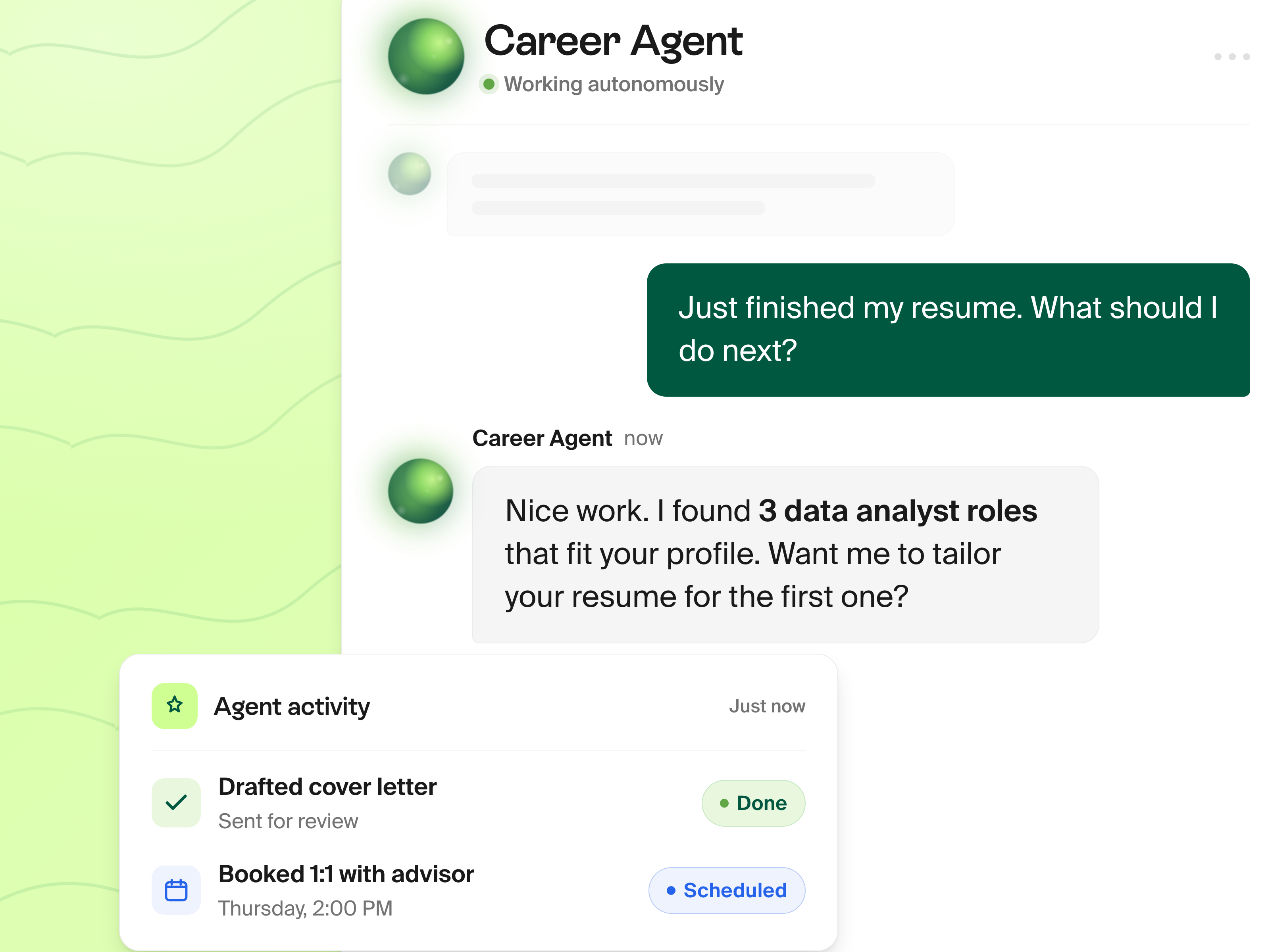
What students and advisors actually get
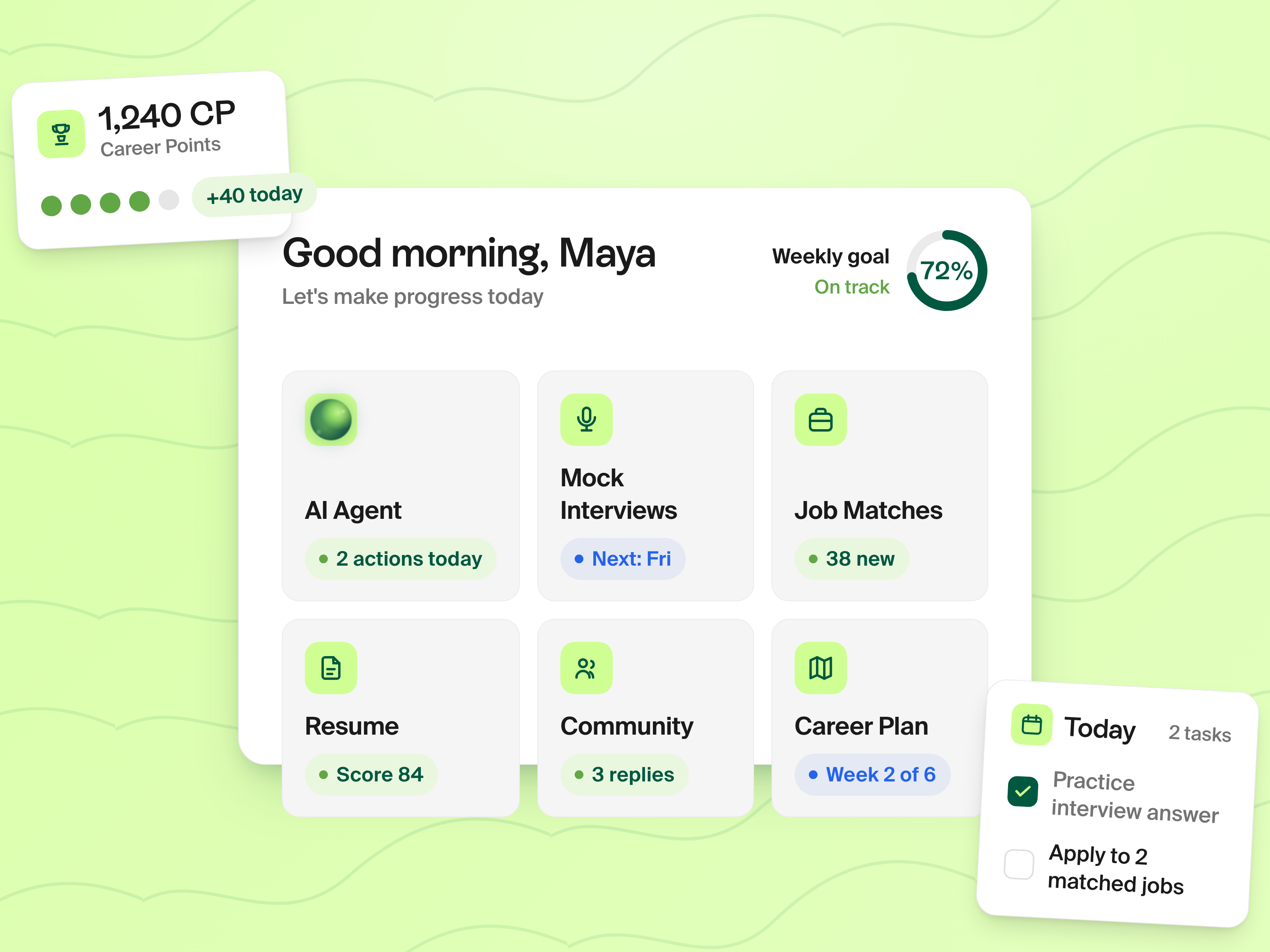
Prentus gives students a consistent coaching layer across resume work, interview practice, job search planning, and day-to-day questions. Advisors get the workflow layer needed to prioritize effort, monitor engagement, and intervene at the right moment.
- 24/7 AI support so students do not have to wait for office hours.
- Proactive nudges, weekly plans, and interview prep that keep students moving.
- Advisor visibility into engagement, risk, and outcomes instead of guesswork.
Want to see the scaled coaching model live?
Book a DemoPrentus has completely transformed how we support our students. The AI tools handle the volume while our team focuses on what matters most: building real relationships.
Ana Aristizabal
Director of Career Services
Frequently Asked Questions
What does it mean to scale career coaching with limited staff?
Scaling career coaching means giving more students timely guidance without hiring a proportional number of new advisors. The practical model is to let AI handle high-frequency support like resume help, interview practice, and routine questions, while human advisors focus on complex coaching, employer relationships, and escalation cases.
What is a typical student-to-career-services staffing ratio?
NACE reported a mean student-to-professional-staff ratio of 2,263:1 in its 2022 Career Services Benchmark report. At that level, most teams cannot rely on appointment-only coaching if they want broad student engagement.
How should a career center structure coaching when it cannot hire more advisors?
Use a tiered service model. Tier one is always-on AI coaching every student gets by default, covering resume feedback, interview practice, and routine job search questions. Tier two is group and cohort programming for shared moments like internship season or first-destination reporting. Tier three is one-to-one advisor time, reserved for complex cases and students the engagement data shows are stuck. The model only works with triage, because without engagement data one-to-one time fills up with whoever books first rather than whoever needs it most.
How does AI help career services teams coach more students?
AI gives every student always-on help with resume editing, mock interviews, job search planning, and career questions. Prentus adds proactive nudges and advisor visibility so staff can spend their time where human judgment matters most instead of answering the same basic questions all day.
Does AI replace career counselors?
No. AI raises capacity. It handles routine guidance at scale, while counselors focus on strategy, motivation, relationship building, and hard edge cases. The goal is better coverage and better quality, not fewer humans.
How do you know scaled coaching is actually working?
You measure engagement, advisor intervention rates, interview practice activity, resume completion, job search progress, and employment outcomes. Prentus ties those signals together so teams can see which students are moving, which need help, and whether coaching is turning into real outcomes.
Why is student engagement such a big issue for career centers?
Inside Higher Ed and College Pulse reported in 2023 that 31% of students had never interacted with their career center. Scaled coaching matters because a large share of students will not book office-hour appointments on their own, but they will engage with always-on digital support when it meets them where they are.
See Prentus in Action
Join the institutions already using Prentus to deliver better career outcomes with the team they already have.